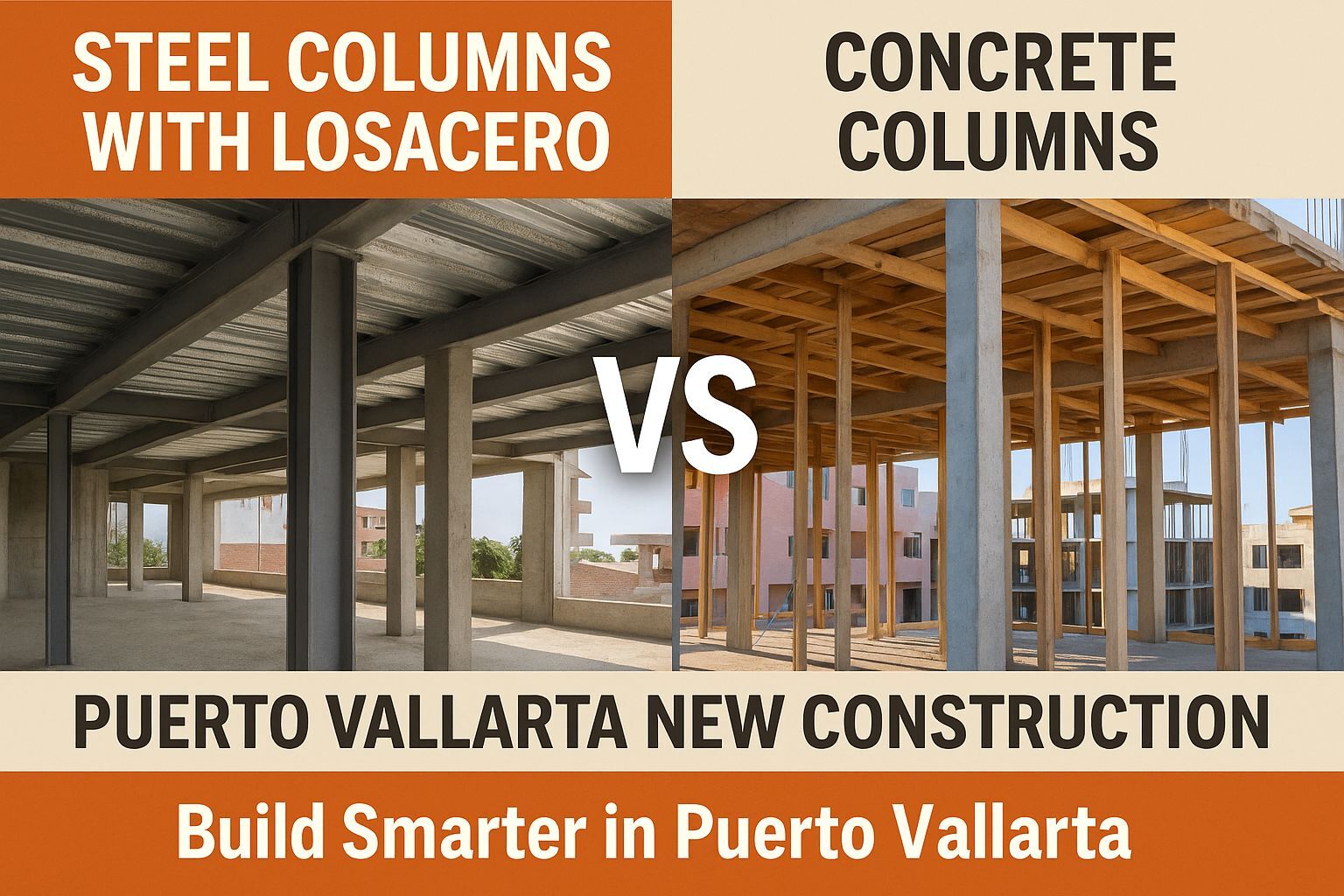
When planning a new construction in Puerto Vallarta, developers often face the decision between using steel columns with Losacero slabs or concrete columns with rebar and wood formwork slabs. Both systems work in the humid, coastal climate of Banderas Bay, but they have significant differences in cost, construction time,
and long-term maintenance and these differences become even more important when you factor in permit timelines and the financial impact of delays.
Choosing the right structural system can make or break your budget, timeline, and long-term durability. Two of the most common methods steel columns with
Losacero slabs and concrete columns with rebar and wood formwork slabs each have clear strengths and drawbacks.
In this coastal, seismic region, the decision isnt just about materials; its also about permit timing, cost control, and maintenance in a salty, humid climate. So, let us analyze both construction methods so you can make the best decision for your project.
Looking for a construction company? Learn more about us
Steel Columns with Losacero
Steel columns with Losacero use a galvanized corrugated steel sheet as permanent formwork, topped with a thin concrete layer.
Advantages
- Faster construction: Around 2 weeks per 100 m floor.
- Lighter weight: Reduces seismic forces and can mean smaller foundations.
- No stripping formwork: Saves labor and speeds progress.
- Open spans: Ideal for modern layouts with fewer interior walls.
Considerations:
- Needs regular anti-corrosion coatings to prevent rust in the salty air.
- Higher initial material costs, though labor costs are lower.
Concrete Columns with Wood Formwork
This traditional method uses rebar cages inside poured concrete columns, with wooden slab formwork that is
removed after curing.
Advantages:
- Lower material cost: Especially if wood formwork is reused.
- Strong compression strength: Excellent for multi-story buildings.
- Lower maintenance: No steel surfaces exposed to coastal air.
Considerations:
- Slower construction: Around 4 weeks per 100 m floor
- Heavier weight increases seismic loads.
- Requires skilled carpentry and more labor hours.
Permit Timelines in Puerto Vallarta
The City of Puerto Vallarta typically processes building permits in 48 weeks, but complex cases (land use
changes, environmental approvals) can stretch to 46 months.
Why it matters:
- If you lose months waiting for permits, youll want a fast build system to catch up.
- Steel + Losacero can shave 2 months off the structure phase compared to concrete + wood formwork.
- Delays increase financing costs, risk price hikes for steel/cement, and can push construction into the rainy
season.
Cost Impact of Permit Delays
Example for a 100 m floor after a 6-month permit delay:
System | Time to Structure | Overhead Savings*
Steel + Losacero | 2 months | MX$80,000160,000
Concrete + Wood Formwork | 4 months |
*Based on MX$40,000/month in site, admin, and financing costs.
Losacero or concrete which system is best for your Puerto Vallarta new construction?
Choose Steel + Losacero if speed, open floor plans, and lighter seismic loads are your priorities especially
if you risk long permit delays.
Choose Concrete + Wood if you want lower upfront costs, reduced maintenance, and arent pressed for
time.
Either way, planning for permit timing is just as important as choosing the material. In new construction in
Puerto Vallarta, every day saved after approval can mean thousands of pesos in avoided costs.